
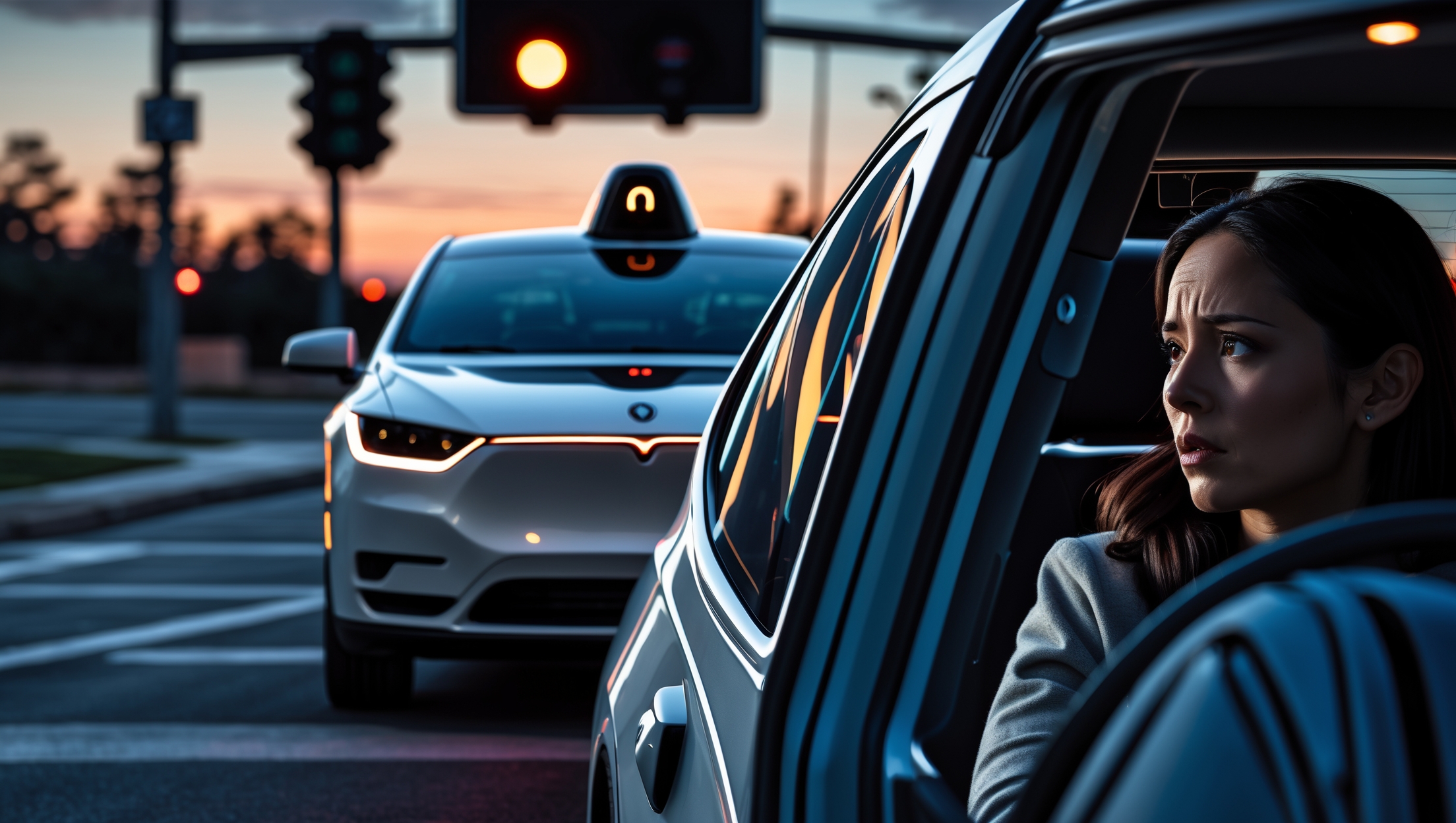
7,000 Dark Stoplights No Match for Waymo's Robotaxis Technology
The world of autonomous vehicles has been abuzz with excitement as companies like Waymo continue to push the boundaries of what is possible with robotaxis technology. In a recent demonstration of its capabilities, the company also said its robotaxis navigated more than 7,000 dark stoplights successfully on Saturday. This impressive feat is a testament to the advanced sensors and algorithms that power Waymo's vehicles, and it has significant implications for the future of transportation. Imagine being able to hop in a car and get where you need to go without ever having to worry about the challenges of driving at night. It's a reality that is closer than you think, and it's all thanks to the innovative work being done by companies like Waymo.
Introduction to Waymo's Robotaxis Technology
Waymo's robotaxis technology is the result of years of research and development in the field of autonomous vehicles. The company, which is a subsidiary of Alphabet Inc., has been testing its vehicles on public roads since 2009. Over the years, Waymo has developed a sophisticated system that uses a combination of sensors, including lidar, radar, and cameras, to navigate the roads. This system is powered by advanced algorithms that allow the vehicles to make decisions in real-time, taking into account a wide range of factors, including traffic patterns, road conditions, and weather. One of the key advantages of Waymo's technology is its ability to operate in a wide range of conditions, including at night, in heavy rain, and in areas with poor visibility.
How Waymo's Robotaxis Navigate Dark Stoplights
So, how do Waymo's robotaxis navigate dark stoplights? The answer lies in the company's advanced sensor suite, which includes a combination of lidar, radar, and cameras. Lidar, or light detection and ranging, uses laser light to create a high-resolution map of the environment. This allows the vehicle to detect objects, including other cars, pedestrians, and traffic signals, even in low-light conditions. Radar, on the other hand, uses radio waves to detect the speed and distance of other objects. This provides an additional layer of safety, as it allows the vehicle to anticipate potential hazards and react accordingly. Finally, cameras provide a visual feed of the environment, which is used to detect traffic signals, pedestrians, and other objects. By combining data from these sensors, Waymo's vehicles can navigate complex scenarios, including dark stoplights, with ease.
The Benefits of Waymo's Robotaxis Technology
The benefits of Waymo's robotaxis technology are numerous. For one, it has the potential to significantly reduce the number of accidents on the road. According to the National Highway Traffic Safety Administration (NHTSA), there were over 36,000 fatalities on the road in 2019. Many of these accidents were caused by human error, including distracted driving, speeding, and failure to obey traffic signals. Waymo's technology has the potential to eliminate these errors, providing a safer and more reliable mode of transportation. Additionally, Waymo's robotaxis technology has the potential to increase mobility for the elderly and disabled. For many people, driving is a necessary part of daily life, but it can be a challenge for those with mobility issues. Waymo's vehicles provide a solution to this problem, offering a safe and reliable way to get where you need to go without having to drive.
The Future of Autonomous Vehicles
As companies like Waymo continue to push the boundaries of what is possible with autonomous vehicles, we can expect to see significant advancements in the field. One area of research that holds particular promise is the development of vehicle-to-everything (V2X) communication. This technology allows vehicles to communicate with other vehicles, infrastructure, and pedestrians, providing a new level of safety and efficiency. For example, V2X communication could be used to alert drivers to potential hazards, such as a pedestrian stepping into the road or a vehicle cutting off another vehicle. It could also be used to optimize traffic flow, reducing congestion and decreasing travel times.
Challenges and Limitations
While Waymo's robotaxis technology is certainly impressive, there are still challenges and limitations to be addressed. One of the biggest challenges facing the industry is the development of regulations and standards for autonomous vehicles. Currently, there is a lack of clear guidelines for the development and deployment of autonomous vehicles, which can make it difficult for companies to navigate the regulatory landscape. Additionally, there are concerns about the safety and reliability of autonomous vehicles, particularly in complex scenarios such as construction zones or areas with poor visibility. Finally, there are questions about the potential impact of autonomous vehicles on employment, particularly in the trucking and taxi industries.
Conclusion
In conclusion, Waymo's robotaxis technology is a significant advancement in the field of autonomous vehicles. The company's ability to navigate over 7,000 dark stoplights successfully is a testament to the sophistication of its sensors and algorithms. As the technology continues to evolve, we can expect to see significant benefits, including increased safety, mobility, and efficiency. However, there are still challenges and limitations to be addressed, including the development of regulations and standards, concerns about safety and reliability, and questions about the potential impact on employment.
FAQ
Q: How do Waymo's robotaxis navigate dark stoplights?
A: Waymo's robotaxis navigate dark stoplights using a combination of sensors, including lidar, radar, and cameras. Lidar uses laser light to create a high-resolution map of the environment, while radar uses radio waves to detect the speed and distance of other objects. Cameras provide a visual feed of the environment, which is used to detect traffic signals, pedestrians, and other objects.
Q: What are the benefits of Waymo's robotaxis technology?
A: The benefits of Waymo's robotaxis technology include increased safety, mobility, and efficiency. By eliminating human error, Waymo's vehicles can reduce the number of accidents on the road. Additionally, the technology has the potential to increase mobility for the elderly and disabled, providing a safe and reliable way to get where you need to go without having to drive.
Q: What is the future of autonomous vehicles?
A: The future of autonomous vehicles is exciting and rapidly evolving. As companies like Waymo continue to push the boundaries of what is possible, we can expect to see significant advancements in the field. One area of research that holds particular promise is the development of vehicle-to-everything (V2X) communication, which could be used to alert drivers to potential hazards and optimize traffic flow.
Q: What are the challenges and limitations of Waymo's robotaxis technology?
A: The challenges and limitations of Waymo's robotaxis technology include the development of regulations and standards, concerns about safety and reliability, and questions about the potential impact on employment. Additionally, there are challenges associated with navigating complex scenarios, such as construction zones or areas with poor visibility.
Source: TechCrunch